Acne

What is Acne?
 Acne is a common skin condition characterised varyingly by pustules, inflammation, redness and/or swelling. Often a source of embarrassment (particularly in younger patients), acne can be frustrating to manage on one’s own, which is why our experienced Anne Farrell, offers several methods to reduce the appearance of acne. Each treatment plan is customised to meet your needs and adapt to the unique properties of your skin.
What Causes Acne?
Acne typically occurs due to increased production of oil from the sebaceous glands next to the hair follicles as well as a buildup of old skin around the top of the glands. Bacteria (most commonly the species propionibacterium acnes) collect in the buildup of trapped secretions. The body’s immune cells (white blood cells) collect around the bacteria to try to eliminate them.
The oil production by the glands is stimulated by hormones,,which is why acne tends to start around puberty. In some women, hormone problems, such as polycystic ovary syndrome, may contribute to the persistence of acne. In such cases, appropriate investigation and treatment of the underlying hormone problem can help the acne.
How Can You Treat Acne?
There are several treatment options for acne which can be tailored to the individual patient’s acne and circumstances. Dr Farrell has many years experience in treating acne with all of these options and can discuss with you in detail at your consultation the best option for you and your lifestyle.
Prescription Creams and Tablets
Creams and lotions containing antibiotics or vitamin A products (retinoids) can be very helpful and may be enough to control the acne. For more severe acne, antibiotic tablets can be helpful and are usually well tolerated.
To see their maximum effects, treatment for at least a couple of months is usually needed. In some girls and women, subtle hormone problems can contribute to acne. Treatment, usually with an oral contraceptive pill and/or other medication and dietary change, may be helpful.
Microdermabrasion and Superficial Chemical Peels
Microdermabrasion and glycolic acid peels can help remove part of the top layer of the skin, particularly the old skin around the top of the glands, which can reduce the frequency of blocked pores and the buildup of secretions that cause blackheads, whiteheads and acne. Microdermabrasion and superficial chemical peels can be added to enhance other treatments.
Roaccutane®/Isotretinoin
For more severe acne that is unresponsive to prescription creams and antibiotics, Roaccutane®/Isotretinoin tablets can be a very effective treatment. The average duration of treatment is six months. Almost all patients experience dryness of the skin, lips and eyes and an increased tendency to burn in strong sun. Rarer side effects include liver problems and a change in blood fat levels, but regular blood tests can monitor for this. Because Roaccutane® can affect the development of unborn babies, women must take adequate contraceptive measures before, during and for at least one month after a course of Roaccutane®.
There has been concern raised as to whether Roaccutane® may contribute to depression in a small number of individuals, but the majority of patients who receive Roaccutane® experience no significant psychologically adverse effects and notice a significant and permanent improvement in their acne.
LED Light Skin Therapy
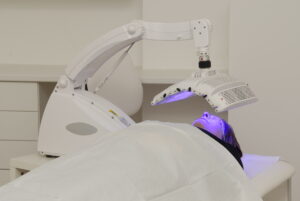 Many patients with acne notice that their skin improves with sunlight. The blue part of sunlight can be beneficial in acne in that it kills the bacteria without the adverse effects of ultraviolet light; however, excessive exposure to ultraviolet light in sunlight can damage skin and increase the chance of skin cancer and wrinkles. There is evidence that light emitting diodes (LED) producing blue light can be beneficial in treating acne. Red light has also been reported to have an anti-inflammatory effect on the skin and to add to the benefit of blue light. As such, many of our patients have found success using LED Skin Therapy.
Treatment under either the blue or the red light takes approximately 20 minutes. This treatment is usually done either twice a week with alternating blue and/or red light treatment, or once a week with simultaneous blue and red light exposure. Some improvement can usually be seen after four weeks, and published studies suggest this improvement continues for up to two months after treatment is stopped. Blue and red light is probably not as powerful in dealing with severe acne as Roaccutane®, but it does not have the side effects of Roaccutane®, so it is an option for some patients. It is painless and gentle with no known side effects.
Laser Treatment
The use of pulse dye lasers (585nm and 595 nm wavelength) is reported to be of some benefit to acne. The original brand of pulse dye laser used in some of the earliest published studies was the “N-lite” brand. The pulse dye laser was originally developed to treat red birthmarks in babies and is useful in reducing the redness of inflamed acne and early acne scars. It may also have some effect in reducing bacteria.
The laser setting that we use for acne is very gentle, does not cause significant marks or bruising and helps the redness from the acne fade more quickly. We also offer several other lasers/energy based devices which can help acne, including long pulse NdYag, intense pulsed light and Fractora. Dr Farrell can discuss the best laser option for you at your consultation.
Photodynamic Therapy for Acne
There has been increasing interest in using photodynamic therapy to treat acne, particularly in the United States. A cream, called porphyrin cream, which is absorbed by the overactive oil glands and temporarily makes the skin more sensitive to light, is applied to the skin for between 30 minutes and three hours. An LED light or pulse dye laser is then used on the skin. It has been suggested that this may cause a more rapid improvement in the acne than LED light or lasers alone, but it is very important to avoid excess light exposure for 48 hours or until the effects of the light sensitising cream have worn off.
How Can You Treat Acne Scars?
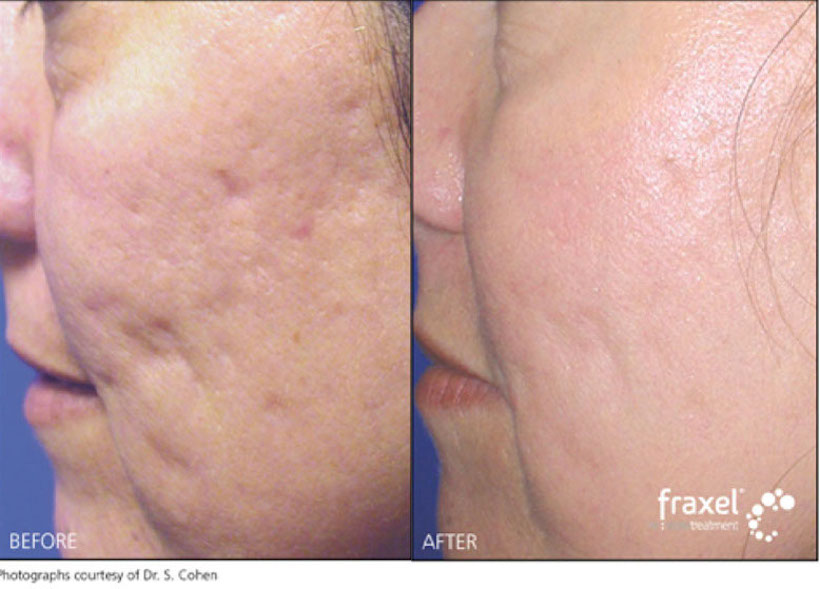
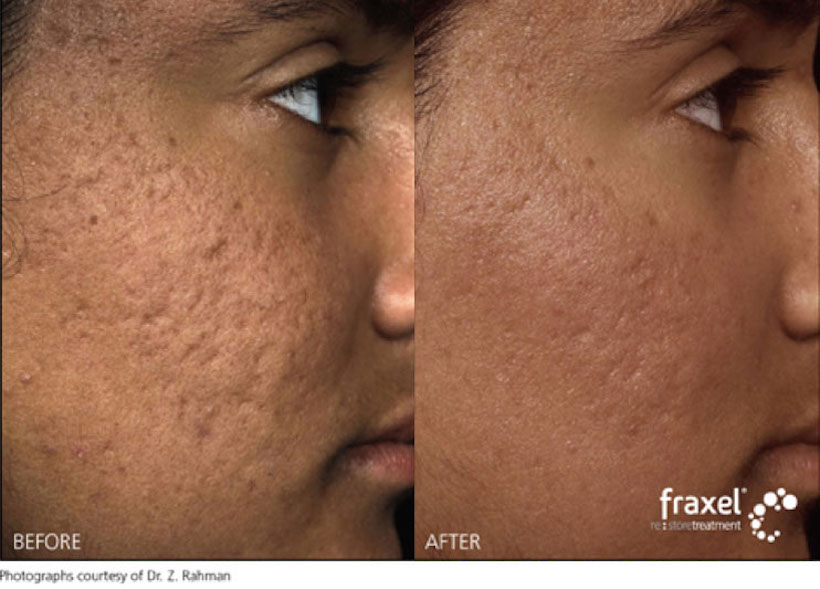
Dr Farrell also has great experience in treating acne scars and has a wide range of effective treatment available for scar reduction (subcision, pulse dye laser, laser genesis/long pulse NdYag laser, microneedling, injections, fillers, Fractora, Fotona laser skin tightening, Fraxel Restore and Fraxel Repair) which she can discuss at your consultation.
An individual treatment plan for dealing with your scars can be made, taking into account the type of scars (e.g. rolled, boxed, ice-pick), the severity of and number of scars, your skin type and colour and your lifestyle.
Skin Care Advice
Sometimes all that is needed is a change in the skin care products being used by the patient. Over-use of rich moisturisers can make acne worse, as the oils in the moisturisers contribute to blocking the sebaceous glands. Washes or cleansers containing salicylic acid can be particularly helpful in removing the excess oil and reducing the severity of acne. Glycolic acid products can also be helpful.